Skip to content

Recent Posts

  • Glossary of Common Academic Acronyms and Jargon (Canada & U.S.)
  • 16 Tips for Succeeding in Graduate School
  • Taking Feedback from your Supervisor
  • How to Pass your Comprehensive Exams
  • Beware of online consumer surveys

Most Used Categories

  • Publishing (4)
  • Writing (8)
  • Tools (2)
  • Methods (24)
    • Design (3)
    • Methodology (4)
    • Quantitative Data Analysis (17)
      • STATA (1)
      • SPSS (10)
  • Graduate School (3)
Skip to content

Practical Advice for Research, Writing, and Academia’s Hidden Curriculum

Subscribe
  • Graduate School
  • Writing
  • Methods
    • Methodology
    • Design
    • Quantitative Data Analysis
      • Statistics
      • SPSS
      • STATA
  • Tools
  • Publishing
  • Podcast
  • Home
  • Episode
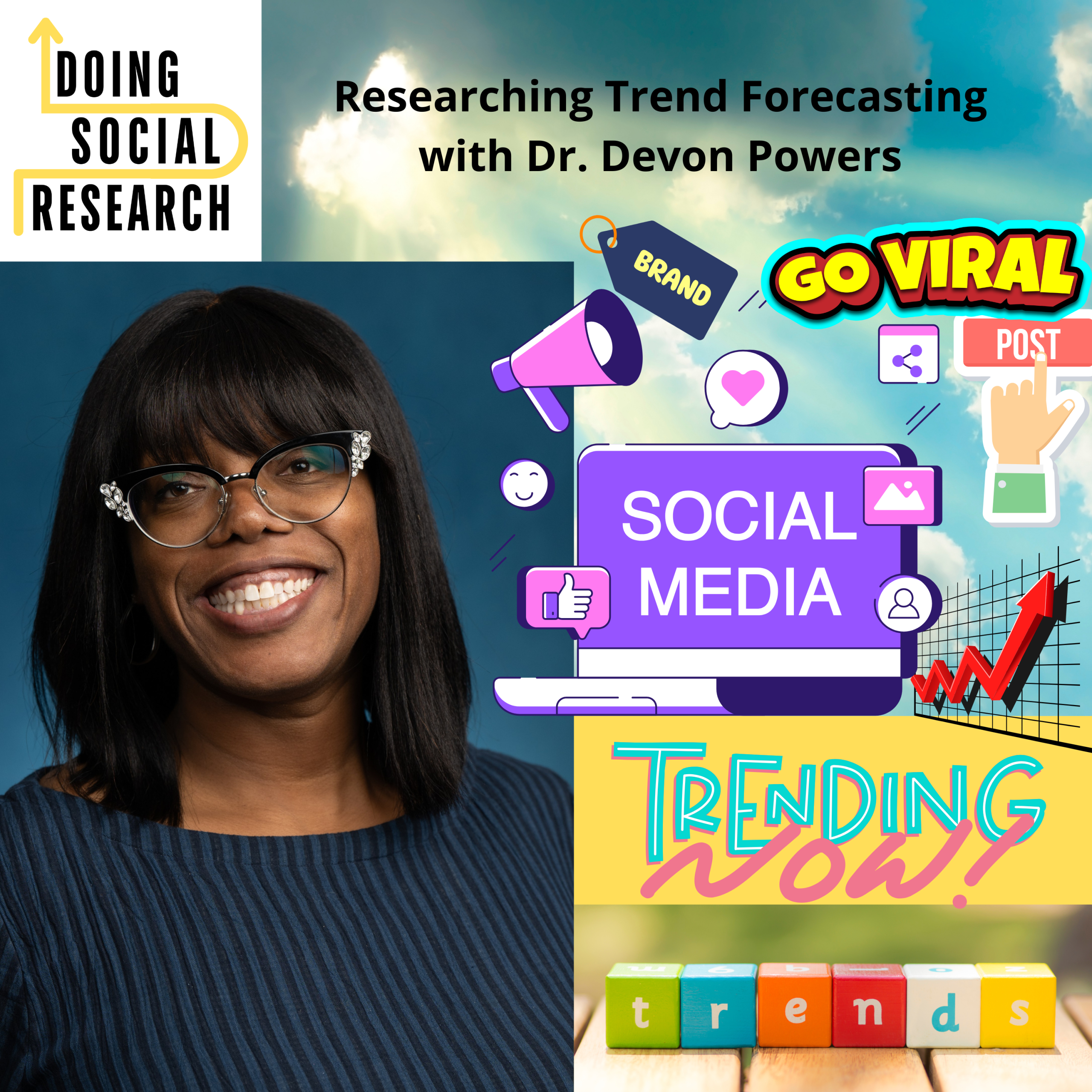
  • Researching Trend Forecasting with Dr. Devon Powers

Researching Trend Forecasting with Dr. Devon Powers

Doing Social Research: The Podcast
Researching Trend Forecasting with Dr. Devon Powers
Loading
00:00 / 1:02:58
Apple Podcasts Spotify
RSS Feed
Share
Link
Embed

Download file | Play in new window | Duration: 1:02:58 | Recorded on August 18, 2026

Subscribe: Apple Podcasts | Spotify

SHOW NOTES

In this episode, Phyllis interviews Dr. Devon Powers, professor of Communication and Media at the University of Michigan. Known for her influential work on branding, consumer culture, and promotional industries, Dr. Powers offers insight into the evolving world of trend forecasting, both as a cultural practice and a speculative force. Reflecting on the role of forecasters as cultural interpreters, she discusses how they construct narratives out of scattered social cues and, in doing so, help shape the futures they claim to predict. The episode dives into how platforms like TikTok and developments like AI have transformed trend emergence, and how branding, futurism, and influence not only what we consume but also how we live. 

The discussion expands beyond consumerism into deeper political and social currents, touching on rising authoritarianism, and how in chaotic times, people cling to authoritative figures for direction and meaning. Grounded in both historical context and forward-thinking critique, this episode is a thoughtful meditation on the narratives we accept, the futures we co-create, and the quiet but powerful actions that offer hope.

* Note that this episode was recorded in February 2025.

GUEST BIO 

Dr. Powers is a Professor of Communication and Media at the University of Michigan, specializing in the study of consumer culture and the dynamics of cultural intermediation, circulation, and promotion. Her research delves into how trends emerge and evolve, the role of branding, and the history of popular music. She is the author of several notable works, including, On Trend: The Business of Forecasting the Future (2019), Writing the Record: The Village Voice and the Birth of Rock Criticism (2013), and co-editor of Blowing Up the Brand: Critical Perspectives on Promotional Culture (2010), a collection analyzing the complexities of branding in modern society. Her scholarly articles have been featured in esteemed journals such as Communication Theory, New Media & Society, and the Journal of Consumer Culture.

Beyond academia, she has contributed to popular outlets like Wired, The Atlantic, and The Washington Post, bridging the gap between scholarly research and public discourse. Powers earned her Ph.D. from New York University and her B.A. from Oberlin College. Before joining the University of Michigan, she held academic positions at Drexel University and Temple University. Her work offers valuable insights into the mechanisms of cultural trends and the interplay between media, culture, and consumer behavior.ble insights into the mechanisms of cultural trends and the interplay between media, culture, and consumer behavior.

TRANSCRIPT 

00:07:00 Speaker 1

So hello and welcome to doing Social Research where I talk with some of my favorite people who do Social Research to dig into the cool projects they’re working on, along with the struggles and successive successes they’ve had in their careers.

00:07:13 Speaker 1

My goal is to help demystify research for students, inspire other researchers, and provide a platform for all the brilliant work of folks doing research in the humanities and social sciences.

00:07:22 Speaker 1

I’m your host, Phyllis Rippey, a professor of sociology at the University of Ottawa and creator of the website doing Social Research.com

00:07:29 Speaker 1

But today, we’re not here to talk about me.

00:07:31 Speaker 1

We’re here to talk with one of my favorite academics and oldest friends, the brilliant Devon Powers.

00:07:36 Speaker 1

Doctor Powers is a professor of communication and media at the University of Michigan, specializing in the study of consumer culture and the dynamics of cultural intermediation, circulation and promotion.

00:07:47 Speaker 1

Such fancy words her research delves into how trends merge and evolve, the role of branding, and the history of popular music.

00:07:54 Speaker 1

She’s the author of several notable works, including.

00:07:58 Speaker 1

I’m going to start actually from the oldest to the newest, because the newest is the one I’ve read.

00:08:04 Speaker 1

So she is Co.

00:08:05 Speaker 1

She was coeditor of blowing up the brand critical perspectives on promotional culture published in 2010, which is a collection analyzing the complexities of branding and modern society.

00:08:15 Speaker 1

She also wrote in 2013, writing the record the Village voice and the birth of rock criticism, exploring the origins of rock music criticism and its cultural impact.

00:08:24 Speaker 1

And my favorite book, which I assigned in a course in 2020 before the whole world blew up.

00:08:30 Speaker 1

Her book, released in 2019 on trend, the business of Forecasting the Future, examines the trend forecasting industry.

00:08:37 Speaker 1

And its influence on consumer behavior.

00:08:39 Speaker 1

And it is fascinating, and everyone should read it.

00:08:41 Speaker 1

I mean, read all of her books, but um, do as I say, not as I as I’ve done.

00:08:46 Speaker 1

Anyway, she also has a number of scholarly articles featured, an esteemed journals such as communication Theory, New Media and Society, and the Journal of Consumer Couldn’t.

00:08:54 Speaker 1

And the girl?

00:08:55 Speaker 1

I can’t speak today, and the Journal of Consumer Culture beyond academia, she has contributed to popular outlets like Wired, the Atlantic, and the Washington Post, bridging the gap between scholarly research and public discourse.

00:09:07 Speaker 1

Devin earned her PhD from New York University and her BA from Oberlin College, and before joining the University of Michigan, she held academic positions at Drexel University and Temple University.

00:09:17 Speaker 1

And she is just brilliant and amazing and always has insights that I’m like.

00:09:24 Speaker 1

And, um, she’s sticking her tongue and saying no, but it is 100% true.

00:09:28 Speaker 1

So welcome to my podcast

00:09:32 Speaker 2

How are you?

00:09:33 Speaker 1

Yeah, I’m good.

00:09:34 Speaker 1

Oh, also I forgot to mention that Dev0n and I are also friends with former doing Social Research.

00:09:40 Speaker 1

The doing Social Research podcast guest Mike Allen and I was just saying we need to have.

00:09:47 Speaker 1

I dropped the ball on coordinating a little reunion, but anyway, I’m so excited that you’re here.

00:09:55 Speaker 2

We have known each other more than 25 years, which is crazy.

00:09:59 Speaker 1

I know I thought I was 25 years old and.

00:10:00

Have.

00:10:03

No, no.

00:10:04 Speaker 1

Yeah, I am not. Yeah.

00:10:05

That’s.

00:10:07 Speaker 1

No.

00:10:07 Speaker 1

So we were just talking before we started about politics stuff.

00:10:11 Speaker 1

But and I was like, Oh my God, we have to just stop talking so that I can get it all on the podcast.

00:10:18 Speaker 1

But before that I just want to back up and I want to.

00:10:21 Speaker 1

I always like to start with asking just what research are you doing these days.

00:10:26 Speaker 2

Yeah.

00:10:26 Speaker 2

So um, I am working on continuing my research on trends.

00:10:33

Hello.

00:10:33 Speaker 2

I have, you know, when I wrote my last book, which came out like a couple months before the pandemic started, I was just really, I I feel like I stumbled into a little bit of a gold mine because I kind of discovered this whole area that was really fascinating to me that hadn’t had that much research on it.

00:10:49

No.

00:10:56 Speaker 2

So that was trend forecasting and my last book was mostly about.

00:11:00 Speaker 2

The history and sort of contemporary practices of trend forecasting thinking about the kind of role of futurism and futures in in anticipating the future, both for companies, but also kind of for society in general.

00:11:15 Speaker 2

Um, but as I was working on that book, I realized, you know, I have a lot more to say about trends and the my last book came out before.

00:11:21

Hmm.

00:11:24 Speaker 2

TikTok.

00:11:25

Ah.

00:11:25

And.

00:11:26 Speaker 1

Or tick tock.

00:11:28 Speaker 1

Yeah.

00:11:28 Speaker 2

Tick tock.

00:11:28 Speaker 2

Existed, musically, existed, and then it became ticktock.

00:11:32 Speaker 2

It existed, but it really didn’t take off until 20 in the United States.

00:11:35 Speaker 2

Anyway, it didn’t take off until 2020 really and kinda more.

00:11:39 Speaker 2

Even 2021 and so I found that over that period of time, I think the the idea of a trend has just really solidified and sort of exploded and becomes something that people think about.

00:11:55 Speaker 2

Not that we didn’t think about it before, but we think about it a lot more.

00:11:58 Speaker 2

Um and there’s a class that I teach, and I taught it before COVID and I taught it after COVID.

00:12:05 Speaker 2

It’s called trends and consumer culture, and that class has even changed because now students come and they’re like, oh, a trend is what’s on.

00:12:13 Speaker 2

Tick tock.

00:12:14 Speaker 2

Are we going to study like, you know, the malliard trend or like you?

00:12:19 Speaker 2

Know thanks. Click girl.

00:12:20 Speaker 1

I don’t know what that is, but.

00:12:22 Speaker 2

Goodnight.

00:12:23 Speaker 2

You know Brad summer, like, are we gonna study that stuff and we do a little bit, but trying to.

00:12:30 Speaker 2

Get them to think.

00:12:31 Speaker 2

About how a social media trend relates to the kind of broader idea of trend is something I realized can be is like is work that I can do as a teacher but also as a scholar.

00:12:42 Speaker 2

So that is where my energy has kind of been placed lately.

00:12:46 Speaker 1

I love it.

00:12:47 Speaker 1

So what?

00:12:48 Speaker 1

What is the trend if I can go back to basics here?

00:12:53 Speaker 1

I mean not to make you do.

00:12:54 Speaker 1

Your whole class, but no.

00:12:56

Yeah.

00:12:56 Speaker 1

That’s fine.

00:12:58 Speaker 2

A trend is a lot of different things, but I think about it basically as a pattern in.

00:13:01 Speaker 2

Culture.

00:13:03 Speaker 2

And it’s a way that we identify a pattern in culture, and it’s the the name that we give to that pattern when that pattern is changing overtime.

00:13:12 Speaker 2

So for example, we could talk about trends 1 trend.

00:13:15 Speaker 2

I always tried out because it’s a.

00:13:18 Speaker 2

It’s a very broad trend.

00:13:20 Speaker 2

Is um living alone this this tendency and this this change that’s been happening over the last you know, you could say a couple of decades of more and more adults are living.

00:13:32 Speaker 2

Phone and that is a broad based change.

00:13:35 Speaker 2

We have to see a time horizon or a time frame of decades to really see that happening, but there’s an unmistakable pattern in culture where adults are tending to delay marriage.

00:13:48 Speaker 2

They’re tending to live by themselves for longer.

00:13:52 Speaker 2

Or maybe they get married and then they separate from that person and they live by themselves.

00:13:57 Speaker 2

Or maybe they never get married at all.

00:13:59 Speaker 2

And and there’s a number of different reasons for that.

00:14:01 Speaker 2

And we could think about all of the different reasons, but to me that kind of dynamic that change over time, that pattern that you can trace is very similar to something you might see on social media.

00:14:13 Speaker 2

Um, which is like, you know, let’s say there’s a dance that’s that’s attached to a song.

00:14:18

Hmm.

00:14:20 Speaker 2

That’s also a pattern that’s being.

00:14:22 Speaker 2

That pattern is being found.

00:14:24 Speaker 2

And on social media, it’s being found by data and algorithms, but it’s still a pattern, and it’s a change.

00:14:29 Speaker 2

It’s happening overtime.

00:14:29 Speaker 2

The time has just two days rather than 20 years.

00:14:32 Speaker 1

Right.

00:14:34 Speaker 1

Yeah.

00:14:34 Speaker 1

Yeah, that seems it’s like like I think as a sociologist, I’ve always drawn to the sort of sociological parts of your of your work, but it’s like that sounds so.

00:14:46 Speaker 1

Like I also maybe because I’m so slow at doing my own research, I’m like that seems so hard to just like if you have something that’s like over multiple decades, it’s like I can take my sweet *** time and looking at that, but like with social media trends, they happen so fast.

00:15:03 Speaker 1

It’s like you can blink and then miss one.

00:15:07 Speaker 1

Like how?

00:15:08 Speaker 1

How do you how do you account for that?

00:15:11 Speaker 1

Like, how do you do that in your research?

00:15:13 Speaker 1

Like, do you feel like you’re?

00:15:15 Speaker 1

Constantly having to like catch up or how does how do you find that with that the temporality of it?

00:15:21 Speaker 2

That’s a complicated question, and I think there’s a couple of different answers, but the answer that I give so I’m in media and communication, that’s my discipline and people who study media and communication always are chasing things that are.

00:15:38 Speaker 2

The current I shouldn’t say always there are media historians out there.

00:15:40

Yeah.

00:15:42 Speaker 2

There are theorists out there.

00:15:44 Speaker 2

Those things are kind of more a little more static, but if you’re chasing, even if your doing television or news, those things are dynamic, they change, they happen all the time.

00:15:52 Speaker 1

Yeah.

00:15:54 Speaker 2

And so the decision that I came to when I was probably in Graduate School was like, I’m a history.

00:16:03 Speaker 2

Man and you can be a historian of the present, you know.

00:16:07 Speaker 1

Of the hearts, yeah, yeah.

00:16:10 Speaker 2

Anytime you know if you think about it all.

00:16:14 Speaker 2

Response to culture.

00:16:15 Speaker 2

All cultural reflection, all cultural criticism is historical because you are not like you live in a moment, and the moment is passing.

00:16:24 Speaker 2

The moment that we’re having right now is passing before us as we are experience again.

00:16:26 Speaker 1

I know that causes.

00:16:28 Speaker 1

Oh my God, it causes me so much existential angst when I think about that.

00:16:32 Speaker 1

I’m like I might as well just be.

00:16:33 Speaker 1

It’s like the two for see that movie arrival with Amy Adams.

00:16:36 Speaker 1

I think about that movie.

00:16:37 Speaker 1

Lives has so much it’s like rent, free space and half of my brain.

00:16:42

Yeah.

00:16:42 Speaker 2

Yeah, but to me, I find that liberating because it means that you have to always, no matter what you’re studying, you have to take the stance of the historian with it, and you have to recognize that you live in time.

00:16:56 Speaker 2

And that you have to be sort of like modest about modest about your assertions but also think of them as is like dynamic right and so that’s just the way and and you know I also think.

00:17:11 Speaker 2

This is again maybe a little bit philosophical, but the world doesn’t change nearly as fast as we think that.

00:17:16 Speaker 2

It does actually.

00:17:17 Speaker 1

Yeah, yeah.

00:17:19 Speaker 2

And even the sort of like day-to-day ripples of culture that you might catch on or miss, right?

00:17:27 Speaker 2

Like most of those are not actually social change.

00:17:32 Speaker 2

Was.

00:17:32 Speaker 2

Right.

00:17:33 Speaker 1

Interesting.

00:17:33 Speaker 2

Very seldom are they actually social changes, because the social changes that they are indexing are much slower.

00:17:40 Speaker 2

So that is the attitude that I mostly take with it.

00:17:43 Speaker 2

But you know another answer is that when I teach my trends class, my students are the ones that help me to stay kind of on top of what’s actually happening.

00:17:49 Speaker 1

Uh, great.

00:17:53 Speaker 2

But they, you know, again, this is another philosophical point, but.

00:17:56 Speaker 2

Um, culture is so fragmented these days that even I can’t even reliably assume that my students all are know the same reference points, right?

00:18:06

It’s.

00:18:07 Speaker 1

Yeah.

00:18:07 Speaker 2

So, in a way, they’re catching up with each other as well, from own little microcosms.

00:18:11 Speaker 1

Interesting, it’s.

00:18:13 Speaker 1

So yeah, yeah, that is so fascinating.

00:18:17 Speaker 1

Um, I want to go back to what we were talking about first, just sort of about applying this.

00:18:21 Speaker 1

But before that I just want to go back a little bit just so that we don’t get too far.

00:18:26 Speaker 1

Off the brand that I am building and also you, I am such a dork.

00:18:31 Speaker 1

You are the person, I think, who taught me the concept of like having a brand when you came to talk to my class in 2020, I was like, yeah, you know, I’ve been really working on building my own brand, but I wanted to go back just a little bit about on your last book because partly because I love it so much.

00:18:50 Speaker 1

But I think also it lays a good foundation for thinking about, like the stuff we were talking about, which was about like, what’s happening in American politics with like, Trump is doing, what’s happening around.

00:19:02 Speaker 1

World, but it seems so related to the the people that you were looking at in your book of people who are sort of forecasting the future and we’re looking at like what, um, you know what are going to be the upcoming trends?

00:19:17 Speaker 1

And so I wondered like could you just like explain a little bit more about like what the hell is a trend forecaster?

00:19:23 Speaker 1

What is it that like?

00:19:25 Speaker 1

Like, who are these people?

00:19:26 Speaker 1

And tell me more about that.

00:19:29 Speaker 2

Yeah.

00:19:29 Speaker 2

So trend forecasting is a, it’s an industry filled with people who do the job of basically predicting the future for different companies orsand sect.

00:19:40 Speaker 2

So there are trend forecasters.

00:19:42 Speaker 2

Most people, if they’re familiar at all with trend forecasting, they are familiar with fashion.

00:19:43

Yeah.

00:19:47 Speaker 2

So, and the idea of fashion kind of makes sense to people.

00:19:50 Speaker 2

So you know, you see, there are fashion shows, fashion shows for fall 2025 will be happening or will be happening soon.

00:19:58 Speaker 2

And that fashion process is a very.

00:20:00 Speaker 2

Long.

00:20:02 Speaker 2

Well, depending on what kind of fashion you’re talking about, it can be anywhere from six weeks to 18 months of preparation to think about.

00:20:09 Speaker 2

What are the things that people will want to be wearing?

00:20:12 Speaker 2

In the fall.

00:20:13 Speaker 2

Right.

00:20:13 Speaker 2

So if you think about that, that involves everything from silhouettes to materials to colours to, you know, how gendered is the fashion, what kinds of what kind of moods are people in etcetera.

00:20:26 Speaker 1

Skinny pants, skinny jeans or no skinny jeans.

00:20:27 Speaker 2

And so exactly, exactly.

00:20:29 Speaker 1

That’s how I’m, like 10 years old.

00:20:31 Speaker 1

I mean behind.

00:20:31 Speaker 2

It’s.

00:20:32

What’s up?

00:20:33 Speaker 2

So and so fashion forecasters do this process of trying.

00:20:36 Speaker 2

To understand the cultural dynamics, make predictions, and with those predictions, they’re making actual bets like this shirt is going to be fashionable in six months when we put it in a store.

00:20:49 Speaker 2

And so cultural forecasters do very similar kinds of work, but outside of fashion.

00:20:55 Speaker 2

So they might do it with food.

00:20:57 Speaker 2

They might do it with just general attitudes.

00:21:01 Speaker 2

They work in automotives, they work in holidays etcetera, and the idea is what sort of dynamics are happening in.

00:21:08 Speaker 2

Culture.

00:21:09 Speaker 2

How can we capitalize on those dynamics in a way that makes our products market ready when they come to market again, whether that’s six weeks from now, 18 months from now, five years from now, etcetera.

00:21:21 Speaker 2

So I can give it another sort of concrete example.

00:21:24 Speaker 2

If we go back to the trends I talked about in the beginning, which is living alone, right, so again, I use this example a lot, but I think it makes sense.

00:21:33 Speaker 2

So if you think about your, let’s imagine your Home Depot or Lowe’s or some kind of HomeGoods store hardware store and you are facing a world in which people are living alone.

00:21:45 Speaker 2

Right.

00:21:45 Speaker 2

There’s not the sort of nuclear family.

00:21:48

Yeah.

00:21:48 Speaker 2

Husband and wife and two kids.

00:21:49 Speaker 2

Not only just because there’s been changes in terms of sexuality and parenting and people having kids later or not having kids at all, people not partnering, people being in throttles like all different kinds of familial arrangements that exist these days and your Home Depot and you say, well, what is my strategy going forward, right.

00:22:08 Speaker 2

And if you can think about that that.

00:22:09 Speaker 2

Would be a strategy that’s not only.

00:22:12 Speaker 2

How do we?

00:22:12 Speaker 2

Brand for the Super Bowl.

00:22:14 Speaker 2

How do we?

00:22:15 Speaker 2

What do we put in our ads?

00:22:16 Speaker 2

But how do we think about our business long term so that we’re making products that are for people who live in apartments, people who live in smaller houses, people who don’t have houses, right?

00:22:26 Speaker 2

So like for example temporary wallpaper that you can stick on and peel off because you don’t actually own the space that you’re living.

00:22:30

Ah.

00:22:35 Speaker 2

And so those kinds.

00:22:35 Speaker 1

Oh my God, I’m totally obsessed.

00:22:37 Speaker 1

Sorry, I may have been one of these people who recently separated and moved into an apartment and I lives on her own except every other week and I am like, Oh my God, I need stick on wallpaper.

00:22:47 Speaker 1

This is, yeah.

00:22:49 Speaker 2

All right, this is the kind of thing that forecasters would help a company to imagine and do.

00:22:56 Speaker 1

Yeah.

00:22:56 Speaker 1

Yeah.

00:22:57 Speaker 1

And there was some kind of like.

00:22:59 Speaker 1

Other crazy examples in your book though, right?

00:23:03 Speaker 1

Like there’s also, like, it’s partly it’s there’s some for companies, but it also gets into like, like the futurism stuff of not just like a year out or like 2 years out.

00:23:15 Speaker 1

But like, there’s some people who are also trying to sort of look at these like global, like we’re all going to be living in pods kind of thing, right?

00:23:24 Speaker 2

Yeah.

00:23:24 Speaker 2

Yeah.

00:23:25 Speaker 2

So I mean, if you think about it again, I’ll go back to this example just to sort of like Kick It Out further.

00:23:31 Speaker 2

Um, anytime you’re asking a company to sort of imagine the future, it’s speculative, right?

00:23:36

Yeah.

00:23:37 Speaker 2

I was and there’s a way in which they call it in futurism, like 2 curves, right?

00:23:42 Speaker 2

So there’s a way in which the world in which we are living in is descending or changing, or and the world in which we are entering does not yet exist.

00:23:51 Speaker 2

It’s sort of ascending, so let’s talk about like AI in that example, right?

00:23:56 Speaker 2

So we have a we have a sort of like.

00:23:58 Speaker 2

Computation 2.0 world that still exists and is still actually quite profitable, but you can also see on the horizon this new world that’s emerging.

00:24:07 Speaker 2

Right.

00:24:08 Speaker 2

And so, you know, if we go back to that Home Depot example, Home Depot has to make a bet and that that that they’re making is not a risk free bet.

00:24:14

Yeah.

00:24:17 Speaker 2

Anytime you’re in a business or any kind of person and you’re making a guess about the future, it’s it’s definitely partially a guess, right?

00:24:24 Speaker 2

And because it exists in the space of speculation.

00:24:29 Speaker 2

There is also action that can be taken in order to bring about the future that you might want.

00:24:34 Speaker 2

So for example, like there are things that Home Depot can do in order to bring about a world in which people might want the stick on wallpaper, and that is by like selling it and offering it in like cute patterns that people will actually want, right? Yeah.

00:24:51 Speaker 2

You can see it more so in like stuff with AI or, you know, robots or something like that.

00:24:56 Speaker 2

That world does not exist yet for most people.

00:24:59 Speaker 2

Google.

00:24:59 Speaker 2

And yet there are actions that companies and individuals and organizations can take that are not just about meeting that future, but actually about executing it and bringing it into being.

00:25:10 Speaker 2

And so that’s where this trend forecasting sort of starts to touch upon, um, kind of speculative futures or things that feel frankly like they can feel pretty out there for people.

00:25:23 Speaker 2

But the idea is that we want to tell you where we think the world might be going so that you can actually sort of like, get ready for it.

00:25:32 Speaker 2

Right.

00:25:33 Speaker 2

And get ready for it in a way that’s not just about.

00:25:33

Including.

00:25:36 Speaker 2

But again, meeting it when it arrives, but actually about bringing it into being.

00:25:41 Speaker 1

That’s OK.

00:25:41 Speaker 1

It makes me think of like, um, electric cars and that like, but like, not just the idea that it’s like, oh, I can afford to buy one, but that it’s something that we can wrap our brains around that this is like, OK, that we’re not going to all die in crash, that we can start or even like.

00:25:47

The.

00:26:03 Speaker 1

So my my my.

00:26:06 Speaker 1

And husband, who I’m currently separated from.

00:26:09 Speaker 1

I don’t know how to refer to him anymore.

00:26:10 Speaker 1

Anyway, he’s often my like metric for very slow adapters to new trends, and I remember even just like a couple of years ago there was a in I think it was across Canada that like a plastic ban, you know, like single use plastics ban and so.

00:26:30 Speaker 1

And he was just like this.

00:26:30 Speaker 1

Nobody is going to be bringing bags to the store.

00:26:32 Speaker 1

He’s like, this is so stupid.

00:26:34 Speaker 1

This is never gonna work like like.

00:26:36 Speaker 1

Nobody has, like people, are just gonna bring like grocery bags to the store.

00:26:40 Speaker 1

That and it’s like.

00:26:42 Speaker 1

No, they actually will do this and but it it any has said similar things about like cars where it’s like this is scary, no one will do it and it’s like over time it’s like I can see how he’s like he always.

00:26:53 Speaker 1

Brings grocery bags now.

00:26:54 Speaker 1

To this store that it becomes.

00:26:58 Speaker 1

So it seems like there’s almost part of the what you’re describing is that it’s.

00:27:02 Speaker 1

It’s like sort of there’s.

00:27:04 Speaker 1

This marketing or like carrying emotional caretaking of preparing us for a future that they are trying to construct, is that fair to say?

00:27:17 Speaker 2

Yeah, I think that’s a very like, charitable way of putting it because I don’t think it’s always like caretaking.

00:27:19

Good.

00:27:22 Speaker 2

Sometimes I think it’s like brute force.

00:27:24 Speaker 2

No, I and but yeah.

00:27:25

With yeah.

00:27:28 Speaker 2

No, it’s like you have to prepare people for the future.

00:27:32 Speaker 2

But you also like businesses also like there is no guarantee that the future that a business wants will.

00:27:39 Speaker 2

Happened, right?

00:27:40

Free.

00:27:40 Speaker 2

So they need to, like, get us on board and they all need to be on board with each other, right?

00:27:46 Speaker 2

So I think AI is a very interesting thing to talk about in that respect because we’re seeing this unfold like I picked up my phone yesterday and it was like, update your phone to Apple intelligence.

00:27:57 Speaker 2

And I was like, no, I don’t want to see that.

00:28:02 Speaker 2

But you can see that like you know, right now it’s a choice.

00:28:05 Speaker 2

And then in a year to it may not be a choice, but by that point I may be so used to, you know, having AI.

00:28:14 Speaker 2

Interfere, like interfere with my e-mail or help me write a text message.

00:28:18 Speaker 2

Or I may be encountering it in a store or like in all of these different ways that then one at that point when I update my iOS and it’s just on there, I’m like OK, you know.

00:28:28

Yeah.

00:28:29 Speaker 1

Yeah, I guess that’s what I mean.

00:28:30 Speaker 1

Like, caretaking was not way more charitable than I would like to be about it.

00:28:35 Speaker 1

It’s almost.

00:28:35 Speaker 1

It’s like it’s almost like a.

00:28:39 Speaker 1

Wearing you down, it’s like you.

00:28:41 Speaker 1

You start to like it’s becomes.

00:28:43 Speaker 1

So it’s like someone in an abusive relationship or it’s like you just start sort of get, it’s like, well, this is just normal, you know, like, this is just how things are when it’s like, that isn’t how it has to be.

00:28:56 Speaker 1

It’s how it’s like been manufactured for it to seem that way.

00:29:01 Speaker 1

OK.

00:29:02 Speaker 2

Yeah, absolutely.

00:29:03 Speaker 2

And the other piece of that is that the company is also don’t necessarily agree on a vision right of what that’s gonna.

00:29:10 Speaker 1

Now.

00:29:11 Speaker 2

So they are duking it out amongst each other, they’re copying each other, they’re trying to one up each other’s, et cetera.

00:29:15

My.

00:29:17 Speaker 2

And that’s happening as they’re also trying to get us consumers and regular folks kind of on board with the things that they’re imagining, which they don’t even necessarily have a clear vision about, right.

00:29:27 Speaker 1

Yeah, yeah.

00:29:28 Speaker 2

And that’s another thing you can see in AI like what’s the business model for AI?

00:29:31

And yeah.

00:29:31 Speaker 2

We don’t know yet, right?

00:29:33 Speaker 1

Ah yeah.

00:29:33 Speaker 2

So throw all of these different uses at you.

00:29:36 Speaker 2

See which ones stick, see which ones we can pull back on a little bit and charge you for.

00:29:41 Speaker 2

And then like, see if that works.

00:29:44 Speaker 1

Yeah.

00:29:44 Speaker 1

Do you have any set like I’m just?

00:29:46

I.

00:29:47 Speaker 1

Always think about like I remember when the iPad came out and I was like, I thought that was the dumbest branding cause I was like, it just made me think maxi pad, right?

00:29:56 Speaker 1

And I remember there was even like Saturday Night Live or something that like had a hold joke about the like iPad that was a pad I think.

00:30:04 Speaker 1

But but it’s like but that’s stuck.

00:30:07 Speaker 1

I was like.

00:30:07 Speaker 1

I was like, there’s no way it’ll stick.

00:30:08 Speaker 1

But then there’s other things where, like an iPod, obviously disappeared because of the iPhone, although they probably still exist.

00:30:15 Speaker 1

But like, people don’t really.

00:30:16 Speaker 1

But but like other like Google glasses or something seems like something like that doesn’t really stick.

00:30:24 Speaker 1

Like, do you have any sense of like what?

00:30:26 Speaker 1

Like what are the forces that make something stick or not?

00:30:29 Speaker 1

I mean, I guess if you knew that you’d be a billionaire.

00:30:30 Speaker 1

But.

00:30:31 Speaker 2

Yeah, I mean.

00:30:32 Speaker 2

That’s also part of trend forecasting, right?

00:30:35 Speaker 2

And so I can’t answer that question across the board because it’s different for every object and everything.

00:30:38 Speaker 1

Rain. Yeah.

00:30:41 Speaker 2

But one of the sort of cardinal rules of trend forecasting, at least like as a discipline, is that societies have values and needs, and that technologies that do not meet those values and needs are going.

00:30:51 Speaker 1

Yeah.

00:30:56 Speaker 2

Fail right and so Google Glass is an interesting one because those technology that technology has come back.

00:30:57

Yeah.

00:31:02

Hmm.

00:31:02 Speaker 2

I have a colleague.

00:31:03 Speaker 2

Actually he doesn’t.

00:31:04 Speaker 2

It’s not Google.

00:31:05 Speaker 2

I believe it’s meta that has glasses now.

00:31:08

Yahoo.

00:31:08 Speaker 2

Um, whether it will stick this time, I think is is still unclear.

00:31:12 Speaker 2

But I think the I think the ground has been laid better than it was in 2015, right?

00:31:18

Hmm.

00:31:19 Speaker 2

And so the the the issue is that like in 2015?

00:31:23 Speaker 2

Like having your phone out all the time was still considered pretty rude and there were lots of places where you could go and you wouldn’t necessarily have Wi-Fi or access to those things, right?

00:31:28 Speaker 1

Right.

00:31:34 Speaker 1

Right.

00:31:35 Speaker 2

So Fast forward 10 years and now.

00:31:39 Speaker 2

Everybody.

00:31:40 Speaker 2

It’s like you’re driving and you have your food out and you know we’ve been through Pokémon Go and we’ve been through, you know, Oculus and VR headsets.

00:31:51 Speaker 2

And so that’s a moment.

00:31:53 Speaker 2

That’s why I say the the the space is still.

00:31:55 Speaker 2

It’s a little bit Ripper for that.

00:31:57 Speaker 1

Yeah.

00:31:58 Speaker 2

Technology.

00:31:58 Speaker 2

I still think it’s not quite because.

00:32:01 Speaker 2

Like VR headsets, for example, don’t have what’s known as like a killer app, meaning like that also is having some problems with monetization and problem.

00:32:10

I know.

00:32:10 Speaker 2

Like what do people?

00:32:12 Speaker 2

What do people really use that for?

00:32:14 Speaker 1

To make really funny Tik toks of people crashing into their TV’s.

00:32:18 Speaker 2

That’s.

00:32:18 Speaker 2

Exactly.

00:32:19 Speaker 2

I mean, it’s like some gamers wear them.

00:32:21 Speaker 2

Some people wear them.

00:32:22 Speaker 2

Watch sports.

00:32:23 Speaker 2

But it still doesn’t quite have the thing where like you and.

00:32:25 Speaker 2

I have one.

00:32:26 Speaker 2

You know, I’m not like so that.

00:32:26 Speaker 1

Right, yeah.

00:32:28 Speaker 2

So that’s what I think.

00:32:29 Speaker 2

Once that happens, if that happens, it’s still an.

00:32:33 Speaker 2

Then the idea of having something like that on your face all the time will be.

00:32:37 Speaker 1

She.

00:32:38 Speaker 2

That’s what I mean.

00:32:39 Speaker 2

Like there will be a need for it.

00:32:41 Speaker 1

Rights.

00:32:41 Speaker 2

And it still.

00:32:43 Speaker 2

It will meet the values of society where they’re at, which again, I still feel like it’s a little bit premature, but you know, again, I’m not a professional.

00:32:46 Speaker 1

Interesting.

00:32:52 Speaker 1

Yeah, I know.

00:32:53 Speaker 1

I’ve always my.

00:32:54

The.

00:32:55 Speaker 2

That’s my idea for those anyway.

00:32:57 Speaker 1

Yeah.

00:32:57 Speaker 1

Now every time I know because you were on the original Rippey Sisters podcast, the precursor.

00:33:02 Speaker 1

To this and I’m always like, tell me what the trend future is.

00:33:05 Speaker 1

And you’re like, that is not my job.

00:33:07 Speaker 1

I am looking at the people who look at that.

00:33:09

Good.

00:33:09 Speaker 1

I’m like, I know, but I want, like, be a psychic.

00:33:13 Speaker 1

Um, but I want to like one of the things you were saying before about how you’re basically a historian and that um and the things don’t change as quickly as we think.

00:33:24 Speaker 1

And I want to go back to that and everything we’ve been talking about and then the pre recording conversation about um, about sort of what’s happening in the United States right now, like with Trump and all these decisions and like because.

00:33:40 Speaker 1

And I want you.

00:33:41 Speaker 1

To.

00:33:42 Speaker 1

If you could sort of come back to what you were saying a little bit before because it seems like there is this, it’s like I feel so chaotic right now.

00:33:53 Speaker 1

Like, it feels like everything that you just described about.

00:33:55 Speaker 1

Like what?

00:33:56 Speaker 1

Big business corporations are trying to do.

00:33:58 Speaker 1

They’re trying to like.

00:34:00 Speaker 1

You know there there wanting to be ahead of the curve.

00:34:04 Speaker 1

They won’t have the next big thing, but it can’t be so ahead of the curve that people aren’t ready for it.

00:34:09 Speaker 1

And so and it also makes me think if there’s this like old sociology of organizations article by DiMaggio and Powell, Powell and DiMaggio, something like that, looking at sort of like organizational is so morphism where they talk about.

00:34:23 Speaker 1

How?

00:34:24 Speaker 1

Like, environmental uncertainty is really hard on businesses.

00:34:28 Speaker 1

And so like people prior to them would talk about well, why are like explaining differences between companies and like why some are successful and they were like, well, we actually need to think about why it is that all organizations tend to become much more similar to each other, that there’s this isomorphism of like becoming.

00:34:46 Speaker 1

I’m repeating myself similar to each other, so and that and that they explained that one of the mechanisms for that is environmental uncertainty that environmental uncertainty poses big risks.

00:34:57 Speaker 1

And as you everything you were just saying is that these companies, you know, there’s a risk that they’re doing this, like betting about what might be the future trend.

00:35:05 Speaker 1

There’s a risk to it, so it’s like too much uncertainty can be really, you know, costly for companies and so.

00:35:14 Speaker 1

Like an.

00:35:15 Speaker 1

Obviously I like.

00:35:17 Speaker 1

Maybe I you are so brilliant to me, but I know that I sometimes ask questions of you and all my brilliant friends.

00:35:23 Speaker 1

That nobody can answer, but it it’s so don’t feel like you have to have an answer to this, but it’s like I see Trump and like the Republicans, as you know, they are the face of corporate America of like, global capitalism.

00:35:39 Speaker 1

And it doesn’t make any sense to me.

00:35:41 Speaker 1

I don’t understand the kind of chaos that is being created.

00:35:45 Speaker 1

Um as a because it just seems so like.

00:35:50 Speaker 1

I mean, there are reasons why I can see it happening, but they’re all it.

00:35:52 Speaker 1

It also just seems so destabilizing and I’m just, I don’t know even what I’m saying, but I want to hear your thoughts on all of this and like how like is there is there, what am I missing?

00:36:05 Speaker 1

What am I not seeing that is like that?

00:36:08 Speaker 1

Make it make sense.

00:36:09 Speaker 1

Make it make sense for everyone.

00:36:09 Speaker 2

How that’s?

00:36:10 Speaker 1

Devin, there you go.

00:36:12 Speaker 1

Small job, small job.

00:36:13 Speaker 2

I don’t know if I can do that.

00:36:15 Speaker 1

That’s fair.

00:36:16 Speaker 1

That’s totally fair.

00:36:17 Speaker 2

But I guess I guess what I would say is.

00:36:21 Speaker 2

I see the rise of Trump not as a surprise.

00:36:28 Speaker 2

The fact that he won the election was not a surprise.

00:36:28

Hmm.

00:36:32 Speaker 2

May have been unfortunate, but it was not a surprise.

00:36:35 Speaker 2

And I also think his rise in 2016 is again unfortunate, but not surprise and is sort of symptomatic of lots of changes that have been happening kind of across the board.

00:36:49 Speaker 2

Word um and again I’ll just go back to 2016 for a second.

00:36:54 Speaker 2

Um, when I was writing my book, my first book, or that my last book.

00:36:58 Speaker 2

Um, I was talking to forecasters in 2016 and 2017.

00:37:02 Speaker 1

Oh yeah, yeah.

00:37:03 Speaker 2

It was like right after Brexit and right before and after Trump had won and.

00:37:13 Speaker 2

And they were sort of like, yeah, how did, what did, what did you know, they were in shock?

00:37:20 Speaker 2

And a similar thing happened at the pandemic.

00:37:23 Speaker 2

They were also in shock about that.

00:37:25 Speaker 1

This is not very good, forecasters.

00:37:26 Speaker 2

Everybody’s well, this is the thing I and it’s like I think that they were not paying attention to their own advice, which is they were not.

00:37:37 Speaker 2

They were not looking at all of the signals and all of the sort.

00:37:40 Speaker 2

Like like hints that were happening in society.

00:37:45 Speaker 2

They weren’t.

00:37:45 Speaker 2

They weren’t paying attention to those things, and so I think that, like, one way to make sense of it is to say, like, there’s always indications in advance of like, things that are going to happen.

00:38:00

Um.

00:38:01 Speaker 2

It’s just a matter of which signals you pay attention to, and I think people tend to pay attention to the signals that they like to the one from there.

00:38:10

Ohhhhh hmm.

00:38:12 Speaker 2

Sort of perspective.

00:38:14 Speaker 2

Their politics, their orientation, et cetera.

00:38:17 Speaker 2

And they tend to discount the ones that are contrary to that.

00:38:21 Speaker 2

So that’s one like one answer to your question.

00:38:24 Speaker 2

Um, another answer to your question though, is like the relationship between chaotic moments in time and like change and I.

00:38:36

Nothing.

00:38:36 Speaker 2

If I think we have been in a long period of chaotic change, you know, if we’ve, even if we just take the question of climate change and environmental degradation into account, that has been happening for a long time.

00:38:51 Speaker 2

And anytime that there is a lot of chaos in the environment that people feel unstable, they want to grab on to things they wanna one grab on to.

00:39:04 Speaker 2

Like, they’re like somebody.

00:39:05 Speaker 2

Tell me what to do.

00:39:06 Speaker 2

Somebody tell you right and the process of somebody tell me what to do can look a lot of different ways and I think one way that it looks as authoritarianism and I have long.

00:39:06 Speaker 1

Friday night.

00:39:07 Speaker 1

Yeah, yeah.

00:39:15 Speaker 1

Yeah, totally.

00:39:18 Speaker 2

Then I I’m I don’t mean to be like such a fatalistic kind of person.

00:39:23 Speaker 2

Here I have long thought that like the response to climate change has to be authoritarianism.

00:39:29

Hmm.

00:39:29 Speaker 2

Uh, it has to look like people mandating.

00:39:35 Speaker 2

In a way, to live that people are not going to like, um, but that also that actually cuts both ways.

00:39:40

Hmm.

00:39:43 Speaker 2

It cuts both in terms of like.

00:39:45 Speaker 2

Like, imagine the kind of regulation that would actually be required in order, absent some kind of amazing scientific breakthrough that does not exist.

00:39:57 Speaker 2

Imagine the kinds of regulation and control that would actually be required in order to do what is really necessary to like to help our planet.

00:40:08 Speaker 2

Yeah.

00:40:09 Speaker 2

I think most people would not want.

00:40:10 Speaker 2

To do that, you.

00:40:11 Speaker 2

Know. So they would have to live in a society where you had to.

00:40:15 Speaker 2

Do that.

00:40:16 Speaker 2

Or face extreme consequences.

00:40:19 Speaker 2

And so, um, in some ways, I think that like, again, this is me kind of going off on my own tangent.

00:40:26 Speaker 2

But I think that like the rise of authoritarianism in the around the world is sort of this like readying people.

00:40:34 Speaker 2

To do what they have to do.

00:40:36 Speaker 2

And again, it’s like it’s cutting the wrong way at this point, and I don’t think that’s necessarily going to cut in the way of protecting the planet, but it might have to.

00:40:45 Speaker 2

Actually.

00:40:46 Speaker 2

You know, if it got point though, bought deep water shortage.

00:40:50 Speaker 2

You know, even if you have, even if you are, you know, have Jinping or someone like Trump in power like.

00:40:58 Speaker 2

Just imagine what that would have to look like, I know.

00:40:58

Song.

00:41:01 Speaker 1

But it’s that’s.

00:41:02 Speaker 2

Yeah, that’s a uh, that’s probably like, you know, this is outside of my.

00:41:07 Speaker 2

I’m not a political scientist.

00:41:09 Speaker 2

I do not have these actually be making these assertions, but yeah.

00:41:09 Speaker 1

Yeah.

00:41:09 Speaker 1

No, no, no, no.

00:41:14 Speaker 1

No, that’s really.

00:41:15 Speaker 1

And I’m like all it’s.

00:41:18 Speaker 1

I am all into like going down the rabbit holes and the tangents and.

00:41:25 Speaker 1

Yeah.

00:41:25 Speaker 1

And just allowing us to sort of use our critical thinking muscles and the information that we have.

00:41:30 Speaker 1

To sort of make humble.

00:41:33 Speaker 1

Hypothesis about what could be doing it.

00:41:37 Speaker 1

I think you know, like nobody knows.

00:41:39 Speaker 1

So like, but I think that’s so interesting because it’s like the authoritarian like Trump is not pro environment, you know.

00:41:48 Speaker 1

And so it is sort of this, but in the context of what you were saying about that, any kind of future trend requires this kind of.

00:41:56 Speaker 1

You know, there’s like, preemptive get everybody comfortable with it.

00:42:01 Speaker 1

It’s so fascinating to think about.

00:42:03 Speaker 1

Like you know, Trump is not going to save the environment, but getting people to feel like, oh, well, at least it’s not Trump’s like, you know that someone else who’s more authoritarian could then come in to sort of save the planet is an interesting hypothesis.

00:42:21 Speaker 2

Again, I don’t think I don’t know that that’s necessarily going to happen, but I guess what I’m trying to a better way to say it is, I think we are in for much less freedom.

00:42:25 Speaker 1

Yeah.

00:42:32 Speaker 2

Then we add and that people, you know, people my age have.

00:42:32

Hmm.

00:42:37 Speaker 2

Throughout our lives, I think that the lessening of freedom is is a requisite to solve these environmental problems.

00:42:46 Speaker 2

But is also just kind of like in the cards for lots of other reasons, and so again, what that looks like, I don’t know.

00:42:51

Yeah.

00:42:54 Speaker 2

And like one way it looks is Trump.

00:42:57 Speaker 2

One way it looks it’s like.

00:42:57 Speaker 1

Yeah.

00:42:59 Speaker 2

You know the like, Maduro like like, you know, one way it looks is, you know, there’s there’s different ways that it can look.

00:43:06 Speaker 2

But it doesn’t look like a free for all you know, sort of creature comforts market the.

00:43:13 Speaker 2

Way that we.

00:43:13 Speaker 1

Yeah.

00:43:14 Speaker 2

Got it. And even if it’s even if it’s just as simple as like you can’t buy avocados because they’re $50 or there’s like a water shortage.

00:43:21 Speaker 2

Like that’s also.

00:43:21 Speaker 1

No Maple syrup, no Maple syrup for.

00:43:24 Speaker 2

You that’s.

00:43:24 Speaker 1

Guys.

00:43:25 Speaker 2

Exactly.

00:43:26 Speaker 2

Awesome.

00:43:27 Speaker 2

Curtailing of freedoms, right?

00:43:28

Yeah.

00:43:29 Speaker 2

And so that’s kind of what I mean.

00:43:29 Speaker 1

Yeah.

00:43:32 Speaker 2

And again, not to be so it is it’s a very it’s very depressing. Hey.

00:43:33

Yeah.

00:43:40 Speaker 2

You know, future to imagine, but yeah.

00:43:40

Yeah.

00:43:42 Speaker 2

But just think.

00:43:43 Speaker 2

Yeah, it’s like I just don’t think you know when people think like having less freedom, they think like someone standing over you telling you what to do every hour of the day.

00:43:54 Speaker 2

And I don’t think it’s going to look like that.

00:43:57 Speaker 2

I think it’s going to look like, you know, putting a fork, a smart fork in your mouth and.

00:44:01 Speaker 2

It’s like.

00:44:03 Speaker 2

You’ve had your calories for the day.

00:44:05 Speaker 1

Oh my God.

00:44:05 Speaker 1

**** that ohk my God.

00:44:06 Speaker 2

OHS, right?

00:44:08 Speaker 2

‘S not work like you know your life going off because there’s not a lot enough electricity to run in 24/7 or.

00:44:15 Speaker 2

There are other things like that.

00:44:17 Speaker 1

Yeah.

00:44:18 Speaker 1

No, I mean, I guess also it was making me think of like, um, Naomi Kleins, the Shock doctrine sort of ideas which her.

00:44:26 Speaker 1

But I haven’t read it, but.

00:44:27 Speaker 1

I know of it.

00:44:28 Speaker 1

This is how I speak of everything.

00:44:30 Speaker 1

Um, you know.

00:44:31 Speaker 1

But her book came out.

00:44:32 Speaker 1

What, like almost 20 years ago now, I think like talking about the way sort of this use.

00:44:40 Speaker 1

You know, like you think it was under George W Bush.

00:44:43 Speaker 1

This use of these shocking events that make exactly what you said at the start to your answer of like these sort of chaotic moments make people fearful and so they sort of grasp on to like authoritarian figures as a way of sort of finding some, I don’t know, some leadership or something like to try to get some control when you feel like the ground is shifting underneath you.

00:44:59

Yeah.

00:45:05 Speaker 1

Oh um, which is.

00:45:08 Speaker 1

Which is really disturbing but.

00:45:10 Speaker 2

And it’s not just authoritarian leaders.

00:45:11 Speaker 2

I think that’s also what big tech is.

00:45:14 Speaker 2

I think it’s an anchor in a moment of chaos that says we know the way.

00:45:18 Speaker 2

Follow us.

00:45:19 Speaker 1

Yeah.

00:45:20 Speaker 1

Yeah, which is terrifying when you think about like Elon Musk as, like, a literal Nazi.

00:45:21

We.

00:45:27 Speaker 1

And you know that he’s the one who’s, like, centre stage with his really awkward, nerdy dances or whatever trying to like take over.

00:45:37 Speaker 1

It’s, but I also you were saying like this idea, though of history being.

00:45:44 Speaker 1

Like you were saying something before and then also now of like that, this isn’t that, it feels very chaotic.

00:45:52 Speaker 1

It feels like things are happening really quickly, but that a lot of these trends, a lot of these social patterns have been going on in other places around the world in other time periods and that it’s, you know, it’s not like.

00:46:06 Speaker 1

Um authoritarianism is new to the world, like that’s not.

00:46:11 Speaker 1

That’s not a new trend, right?

00:46:12 Speaker 2

Yeah, it’s not new to the world, and nor are the sort of contemporary manifestations of it knew to the societies in which they are in, you know, and like I’m going to call back on our history, you know, so when Roe V Wade fell, which was that 2 summers ago, I kept thinking about us in college.

00:46:22 Speaker 1

And.

00:46:34 Speaker 1

Yeah.

00:46:34 Speaker 2

We’re interns at the Feminist Majority Foundation.

00:46:37 Speaker 2

We were working on the campus campaign for choice and the idea back then and the summer of 90.

00:46:43 Speaker 2

This was a nice 90.

00:46:44 Speaker 1

76797 Yeah, yeah, it’s.

00:46:47 Speaker 2

So yeah, the summer of 97 was we need to get young women um, caring about their reproductive rights because people have become complacent.

00:46:56 Speaker 2

And they take them for granted.

00:46:58 Speaker 2

And I remember at the time being like there’s no way I’m gonna.

00:47:03 Speaker 2

At like a bunch of women on my campus, much less men.

00:47:07 Speaker 2

We weren’t even talking about men.

00:47:09 Speaker 2

Right.

00:47:09 Speaker 1

Yeah, no.

00:47:09 Speaker 2

But like, I’m not gonna get a bunch of women on my campus to care about this issue.

00:47:14 Speaker 2

And they were right, because the right had been trying for decades at that point to sort of like food and eat away and chip and chip and get their judges on the courts and get there, you know, their state legislatures and passed these little laws and.

00:47:14

Yeah.

00:47:34 Speaker 2

And they did it.

00:47:35 Speaker 2

And so when Roe V Wade fell, that was not Trump putting these people on the court and they knocked it down.

00:47:43 Speaker 2

That is not what happened.

00:47:44 Speaker 2

That’s like saying the person who made the last basket in a basketball game won the game.

00:47:49 Speaker 1

Right, yeah.

00:47:49 Speaker 2

They didn’t win the game, right?

00:47:50 Speaker 2

They had been playing the game the whole time and the left had not been.

00:47:54

Yeah.

00:47:56 Speaker 1

Yeah.

00:47:57 Speaker 1

Yeah.

00:47:58 Speaker 2

And that’s what happened, you know.

00:48:00 Speaker 1

Yeah.

00:48:01 Speaker 1

Oh, totally.

00:48:02 Speaker 1

No, totally.

00:48:02 Speaker 1

I I can get into these fights with my kids sometimes.

00:48:05 Speaker 1

Where and it’s like got into this texting fight because I was like, they were, like trying to explain to me that it was like Kamala Harris’s fault and the Democrats fault.

00:48:15 Speaker 1

And I’m like, OK for the like last election and I’m like, OK, we can find issues or whatever.

00:48:21 Speaker 1

And I’m not like I don’t want to be like, I don’t want to be defending things that, you know, I don’t know.

00:48:30 Speaker 1

I don’t know, but it seems like could we actually start looking at American history since its founding?

00:48:36 Speaker 1

Let’s start with this coloration of independence.

00:48:38 Speaker 1

Let’s start with like foundational ideas about like what freedom means and what it like in.

00:48:44 Speaker 1

By law, and then in practice, what does it really mean?

00:48:46 Speaker 1

And then I’m like, OK, now let’s start looking at, like going through from like JFK and like the Johnson and the Civil Rights Act and how all of these there’s been this like push and pull between the left and the right.

00:49:01 Speaker 1

But the right has just been, I mean it, it helps that they have so many billionaires in order to like fund what it is that they’re doing.

00:49:12 Speaker 1

But it’s like there has been this non-stop, very clear targeted attack and.

00:49:19 Speaker 1

On it’s like they picked their battles where they were like we’re going to do abortion.

00:49:24 Speaker 1

We’re going to do gay people, and then we’re just not going to talk about like, you know, we’ll say no new taxes.

00:49:31 Speaker 1

And then we’re going to get all the people on board with these two issues and it’s like, I’m always trying to figure out what would be an issue that would, like, get the same kind of like anger or resentment or, like, just action on the left.

00:49:49 Speaker 1

And it just feels like it’s, you know, I think climate change is one thing that that has been a kind of galvanizing issue.

00:49:58 Speaker 1

But it like the this idea that if we just like that there’s individual actors right now that we can point our finger out and be like, well, they ****** ** denies like 6200 years of history of a very, um, sort of systematic.

00:50:20 Speaker 1

What’s the word I’m looking for?

00:50:21 Speaker 1

Like systematic pathway to power that is not going to be undone really easily and I find it really depressing and really hard.

00:50:32 Speaker 1

But and also like I also think about, there’s this book that I absolutely love by.

00:50:39 Speaker 2

I have to go.

00:50:40 Speaker 2

Hold on.

00:50:40 Speaker 2

Hold on one second.

00:50:41 Speaker 1

Sure, sure, sure.

00:51:14 Speaker 2

I’m so sorry.

00:51:15 Speaker 2

I’m so sorry.

00:51:15

No, that’s OK.

00:51:16 Speaker 2

I.

00:51:16

I’m.

00:51:16 Speaker 2

So so package and it wasn’t supposed to come to 1 and it just came.

00:51:19

Who?

00:51:20 Speaker 2

So.

00:51:20 Speaker 1

No worries, no worries.

00:51:21 Speaker 1

I just no of like the for the just cut it.

00:51:21

Put alarm at.

00:51:25 Speaker 1

It’s like it’s the best part of things not being alive, and I’m also like stumbling around for my words.

00:51:30 Speaker 1

So I’m also like Devin had to go, but right before that I was really stumbling, stumbling around pauses.

00:51:35 Speaker 1

Some like fix that, but my what does there’s this.

00:51:38

Help.

00:51:41 Speaker 1

But by this colleague of mine, Um Paul Sarrett, that he wrote with this one, Kelly Gordon, the political scientist, looking at the antiabortion movement in the United States and Canada, and it is so disturbing when I read it.

00:51:55 Speaker 1

How much of what they’re talking about, like how much the anti abortion movement has coopted all of the things that we were saying back in 1997 and all the things that we’re doing?

00:52:06 Speaker 1

Things like reproductive choice is that now the like anti abortion movement people are like, well you have.

00:52:12 Speaker 1

You can choose to keep the baby.

00:52:14 Speaker 1

You can, you know, you just need like informed consent.

00:52:17 Speaker 1

So you need to have an ultrasound of the, you know, six week zygote or whatever it is at that point, um and it it is really to me, um, like it’s just been, it’s just been a really effective.

00:52:32 Speaker 1

It’s just so complicated, like, I don’t know, like all of these things, as you said, it’s like it can feel like the chaos is happening right now.

00:52:41 Speaker 1

It can feel like, Oh my God, this weird thing just happened.

00:52:44 Speaker 1

But this is all been a work in progress for decades, and I mean, I guess that also goes back to then like what you’re talking about with what trend forecasters are doing and what you were just saying about what are the things that we listened to?

00:52:58 Speaker 1

What are the things that we pay attention to?

00:53:00 Speaker 1

It’s and I am personally totally can be Pollyanna, where I’m like, no, I don’t be OK.

00:53:05 Speaker 1

It’ll be OK, but it is there like these.

00:53:10 Speaker 1

This trends are not coming in a vacuum.

00:53:13 Speaker 1

I guess is what I’m trying to say.

00:53:16 Speaker 1

Yeah.

00:53:16 Speaker 2

And I think they are also not propelled by time, right?

00:53:23 Speaker 2

Like I think we tend to be very whiggish about or about progress about.

00:53:30 Speaker 1

What do you what do you mean by whiggish?

00:53:31

It’s not.

00:53:32 Speaker 2

Like that’s basically like this idea that like, things are just gonna get.

00:53:36 Speaker 2

Here.

00:53:37 Speaker 2

That’s gonna great.

00:53:37 Speaker 1

Oh, right, right.

00:53:38 Speaker 2

They’re just going to improve, right?

00:53:40 Speaker 2

Like there’s weird the arc of history bends towards social justice.

00:53:44 Speaker 2

It bends towards progress.

00:53:45 Speaker 2

It doesn’t.

00:53:46 Speaker 2

It doesn’t bend towards those things.

00:53:48 Speaker 2

Um, and you know, I think sometimes, you know, to bring it back to trend forecasting and futures, right.

00:53:48 Speaker 1

Yeah.

00:53:55 Speaker 2

This idea that things just change in the direction that whoever is making that argument wants to is, is real ******** and like hear it from tech all the time, there’s nothing inevitable about AI.

00:54:05

Yeah.

00:54:10 Speaker 2

There is nothing inevitable about.

00:54:13 Speaker 2

You know about social media, about any of the sort of technologies that we use or that we see on the horizon.

00:54:19 Speaker 2

Nothing inevitable at all.

00:54:21 Speaker 2

One of the things that one of the things that makes them inevitable or feel inevitable, though, is this rhetoric that people keep propelling, that they are inevitable because it makes people feel like they have no agency and no choice in the matter.

00:54:35 Speaker 2

And then it feeds into this like little tiny.

00:54:39 Speaker 2

Oh well, I guess there’s this AI in my phone.

00:54:41 Speaker 2

I may as well try it, and oh, it’s in my Gmail.

00:54:43 Speaker 2

I guess I’ll try that and oh, they have all my data.

00:54:45 Speaker 2

Anyway, that’s right, right?

00:54:47 Speaker 2

So it’s like that is not inevitability that is.

00:54:47 Speaker 1

Yeah.

00:54:50 Speaker 2

Like right?

00:54:52 Speaker 2

Yes, it is sort of like gradually pushing and eroding peoples or changing gradually, changing people, sense of what’s normal.

00:54:52 Speaker 1

Yeah.

00:55:01 Speaker 2

And that is true.

00:55:01

Yeah.

00:55:02 Speaker 2

It’s true across the board whether we’re talking draconian changes, reactionary revolutionary changes, they all happened that way.

00:55:10 Speaker 2

I think and so.

00:55:10 Speaker 1

Yeah, yeah.

00:55:13 Speaker 2

It’s very rare that we have sort of like an abrupt thing that happens and then the whole world changes.

00:55:19 Speaker 2

And even when those abrupt things happen, let’s say take COVID, they are excel at best accelerating or creating those traditions.

00:55:28 Speaker 2

Those conditions of instability that allow actors to take control and seize it and push things in the direction that they want them to go right.

00:55:36 Speaker 2

That is exactly what’s happened.

00:55:38 Speaker 2

Trump right now as well, right?

00:55:39 Speaker 2

But I say that you know, and you can feel very like, well, what’s the point?

00:55:43 Speaker 2

And the point is that actually there’s there’s always space.

00:55:48

That’s.

00:55:48 Speaker 2

Right.

00:55:49 Speaker 2

The thing I always think about AI to just like bring a random example is like where is all this power gonna come from, huh?

00:55:55 Speaker 2

You know where is all this energy going to come from?

00:55:57 Speaker 2

We are in the United States anyway, like the people who know how to build nuclear plants are all in their 70s, right?

00:56:05

The.

00:56:06 Speaker 2

And like they are, you know, just to say we don’t have the capacity right now.

00:56:11 Speaker 2

How to have a bunch of nuclear plants appear tomorrow like.

00:56:15 Speaker 2

This is a.

00:56:15 Speaker 2

This is a multi year process and involves environmental changes or regulations or deregulations.

00:56:23 Speaker 2

It involves space, involves changing people’s attitudes towards that, and then this idea that all of that power should go to AI and not to our homes, not to our cars, not to our right. So.

00:56:32 Speaker 2

So that again, is it just a way of saying like there’s nothing inevitable about those things, you know, nothing at all, right?

00:56:38

Yeah.

00:56:41 Speaker 2

Like sea levels could rise to a point where, like, you can’t build nuclear power plants on the coast.

00:56:46 Speaker 2

Guess what?

00:56:47 Speaker 2

Right, like so.

00:56:48 Speaker 1

Yeah, yeah.

00:56:50 Speaker 2

So.

00:56:51 Speaker 2

So that’s what I mean.

00:56:52 Speaker 2

But this sense that it isn’t never table is part of the part of the work and the moments that we can say.

00:57:00 Speaker 2

OK.

00:57:01 Speaker 2

I don’t know.

00:57:02 Speaker 2

I don’t know if I believe that I believe this other thing.

00:57:04 Speaker 2

Right then you start that job of building a different narrative, a different idea and working with that, and trying to persuade people that.

00:57:14 Speaker 1

Will you be the next president?

00:57:16 Speaker 1

Because I’m, like, really inspired.

00:57:19 Speaker 1

But how do you do that?

00:57:21 Speaker 1

I mean, and I also like you used the word before we recorded.

00:57:24 Speaker 1

You were talking also about gratitude because like, I’m just thinking we should.

00:57:31 Speaker 1

We should start wrapping up just because of the time, but also I’m loving it feels like there’s this kind of.

00:57:40 Speaker 1

You’re you’re.

00:57:41 Speaker 1

You’re opening this little window into, like, not being nihilistic about it, and I find that really exciting.

00:57:50 Speaker 1

Like that, you’re opening up this window of, like, wait, we have a choice like that.

00:57:55 Speaker 1

It feels hopeless.

00:57:56 Speaker 1

It feels like there’s no choices, but there’s like, just as much as it’s like the, you know, that the tech and AI and whatever the different corporate forces are that are trying to like where us down.

00:58:08 Speaker 1

We also have the capacity to like be the sand in the oyster or whatever and make our own little pearls of wisdom or whatever.

00:58:18 Speaker 1

On.

00:58:19 Speaker 1

Yeah.

00:58:20 Speaker 1

Like tell me more about that.

00:58:23 Speaker 2

I guess you know, I guess I would put that on two different registers and I.

00:58:26 Speaker 2

Think people have to.

00:58:28 Speaker 2

Figure out what register works for them.

00:58:30 Speaker 2

But like the most sort of, like, individualistic way of thinking about it is we we choose how we think, right we choose and we choose how we show up every day we choose what we pay attention to.

00:58:44 Speaker 2

And we choose how we respond to those things.

00:58:48 Speaker 2

And I actually think, you know, I’m not.

00:58:50 Speaker 2

I don’t have this totally worked out, but one thing that I have started to think is especially when you think about like Trump and how he’s so good at marshalling attention that like actually not paying attention to him is in a way like an actor.

00:58:59 Speaker 1

And hmm.

00:59:05 Speaker 2

Resistance.

00:59:06 Speaker 1

Ohm, my God.

00:59:06 Speaker 1

That is so gratifying to me cause I just can’t even look at him anymore.

00:59:10 Speaker 2

Yeah.

00:59:11 Speaker 2

So I’m trying to figure out the balance right because you don’t want him in the corner doing the things while all of us are just like I’m knitting, right?

00:59:20 Speaker 2

What about the answer?

00:59:21 Speaker 2

But I do think the.

00:59:22 Speaker 2

Like one of his strategies has been to like, flood the zone, right?

00:59:27 Speaker 2

He’s trying to.

00:59:27 Speaker 2

He’s a troll.

00:59:29

Yes.

00:59:29 Speaker 2

He’s trying to suck all the oxygen out of the world and make everything constantly about him, and that empowers him.

00:59:37 Speaker 1

Yeah.

00:59:37 Speaker 2

And so finding out ways to not do that, to not give him power.

00:59:43 Speaker 2

I think is is is a key part.

00:59:45 Speaker 2

It’s not the only part, but I think it’s a key part of like whatever that resistance is going to look like.

00:59:50 Speaker 2

So that’s the first thing.

00:59:51 Speaker 2

It’s like we choose what we pay attention to.

00:59:52 Speaker 2

We choose how we think we choose.

00:59:54 Speaker 2

How we show up?

00:59:55 Speaker 2

We choose what we.

00:59:56 Speaker 2

Take for granted and we choose what we are grateful for.

00:59:59 Speaker 2

But I think the fact that the second thing is that we choose how we act and how we respond and how we what we do in the world.

01:00:08 Speaker 2

And I think people have different ways in which they can show up for that too, right?

01:00:12 Speaker 2

Like some people are marching in the street.

01:00:14 Speaker 2

Kind of people and some people are like, have a conversation with your neighbor, kind of people or soda or spend a podcast or or like um and.

01:00:20 Speaker 1

Start a podcast.

01:00:26 Speaker 2

So I always think that we have, you know, while we still while we have choices which we do, we do you know there are lots of people and places in the world that do not have the kinds of choices that you and I have in the United States and Canada.

01:00:40 Speaker 2

Yeah.

01:00:41 Speaker 2

And we need to be grateful for those choices, and we need to act on them while we have them, because it’s very.

01:00:49 Speaker 2

Again, I’m not doing this.

01:00:50 Speaker 2

I don’t think it’s imminent that those choices will go away, but they could go away, you know.

01:00:56 Speaker 2

And so that means, like, you know what?

01:00:59 Speaker 2

Whatever, whatever that means for you, maybe it means calling your politicians your representatives your you know those people.

01:01:05 Speaker 2

Maybe it means going to community meetings.

01:01:07 Speaker 2

Maybe it means you know one of the things that the the right has been really good at.

01:01:11 Speaker 2

Again, speaking in the United States is like run for school board.

01:01:15 Speaker 2

You know, like those things that people go, oh, that doesn’t really matter.

01:01:19 Speaker 2

Guess what?

01:01:19 Speaker 2

Like all the books that have been happening, they’re happening has, like people are like, oh, we can run for school board and then we get to decide what’s in the library.

01:01:20 Speaker 1

Oh my God.

01:01:28

Right.

01:01:28

This.

01:01:28 Speaker 2

So it’s like I think that showing up really matters show up to your Neighborhood Association.

01:01:34 Speaker 2

Show up to you.

01:01:35 Speaker 2

You know that and have conversations with your neighbors and that neighbor who voted differently differently than you talk to that person because maybe persuade that person, you know, I get some people are unsalvageable, but most I want to believe that most people are not.

01:01:52 Speaker 2

Most people can be person.

01:01:53 Speaker 2

Created by evidence.

01:01:54 Speaker 1

Yeah.

01:01:55 Speaker 2

Or they can be persuaded by a nice person.

01:01:59 Speaker 1

Yeah, yeah, totally.

01:02:00 Speaker 2

Goodnight. Uh.

01:02:03 Speaker 1

Yeah.

01:02:04 Speaker 1

And just to bring it back to my brand, doing Social Research, how did like, do you like?

01:02:06 Speaker 2

Yeah.

01:02:09 Speaker 1

How do you think of your research as fitting in to all of these things?

01:02:16 Speaker 2

It doesn’t.

01:02:17 Speaker 1

I think it does.

01:02:18 Speaker 1

I was gonna say, I mean right there.

01:02:22 Speaker 1

Like I’ll say it that I mean I want to to give you, I will just say I think it totally does it because it’s and I’m constantly talking about Hannah, rent and the human condition and like every podcast episode and how in her preface she says, you know, like all she’s trying to do is to get us to think about, like, what are we doing?

01:02:40 Speaker 1

And that to me, is like revolutionary, and it’s what you’re doing, which is you’re saying.

01:02:46 Speaker 1

Who are these people?

01:02:47 Speaker 1

Like just the fact that you’re shining a light on the fact that like it didn’t because of the world, the groups that I run with, the like things that I do like when your book was so eye opening to me because it’s like, oh, obviously these companies are like putting so much money into trying to predict the future so they can do this.

01:03:08 Speaker 1

But like, it never occurred to me before, you know, and and to think about like it really illuminates.

01:03:14 Speaker 1

To me, the ways in exactly what you were just talking about that these things aren’t inevitable, that the things that are happening, these are choices being driven by actors who are making choices that have interests that have their own values, that have their own needs and wants.

01:03:32 Speaker 1

And whatever and that that like that to me, I think is you know this that’s scraping.

01:03:39 Speaker 1

The pushing back comes from understanding what’s happening.

01:03:43 Speaker 2

I I yeah, I think that’s true.

01:03:45 Speaker 2

And I also think you know there’s like.

01:03:49 Speaker 2

Nothing is a monolith.

01:03:52 Speaker 2

Nothing is so powerful out there that it doesn’t have the potential TV road, right?

01:03:59 Speaker 2

It’s like even a concrete wall.

01:04:01 Speaker 2

If you drop water on it long enough, you’ll begin to erode.

01:04:04

Yeah.

01:04:06 Speaker 2

And I think sometimes you know, umm, people, particularly like progressives and on people on the left, can they?

01:04:13 Speaker 2

They can attribute so much power to this idea of like.

01:04:16 Speaker 2

The structure and the resistance, we are the resistance.

01:04:18 Speaker 2

Actually hate that framework.

01:04:20 Speaker 2

I hate it.

01:04:21 Speaker 2

Because like that says that we are.

01:04:27 Speaker 2

Like they have all the power and we’re just trying to like, we’re just sitting over here, right?

01:04:32 Speaker 2

And to me.

01:04:32 Speaker 1

Yeah.

01:04:33 Speaker 2

A better conception is like, you know, we are producing these moments of interaction at every point.

01:04:39 Speaker 2

And those moments can go in lots of different directions at any given point, right?

01:04:44 Speaker 2

We don’t have to cede all of our again.

01:04:48 Speaker 2

I don’t like the word agency, but we don’t have to see all of our action to this structure that we’ve actually helped to create.

01:04:55 Speaker 2

By virtue, we’ve imagined it, you know, and um, I said to my students right after the election.

01:05:02 Speaker 2

We, you know, we met that day and I was teaching this futures class and I have the student who was just like, you know, I’m so depressed.

01:05:09 Speaker 2

How is it possible that this happened and I was like we live in the same world that we lived in yesterday?

01:05:15 Speaker 2

Actually you know.

01:05:15 Speaker 1

Yeah, yeah.

01:05:17 Speaker 2

And all of the things that made this happen existed.

01:05:22 Speaker 2

Maybe we were paying less attention to them, but they existed.

01:05:25 Speaker 2

That also means all of the things that we love and cherish.

01:05:28 Speaker 2

Those still things still exist too, and like we like, it’s part of the flow.

01:05:31 Speaker 1

Yeah.

01:05:35 Speaker 2

It’s the back and forth.

01:05:37 Speaker 2

It’s the dynamic and like we can choose to, like, strengthen the things that we love and care about, you know, and while we still can do those things, let’s do it.

01:05:47 Speaker 1

Yeah, yeah, totally.

01:05:47 Speaker 2

That’s good, you know.

01:05:50 Speaker 1

Totally no.

01:05:51 Speaker 1

And I think, yeah, I mean giving up all hope and like all of our power to.

01:05:58 Speaker 1

To just say, well, it’s, you know, it’s too hard.

01:06:00 Speaker 1

It’s too big.

01:06:01 Speaker 1

It’s like that.

01:06:02 Speaker 1

Doesn’t really create the world that I mean, that’s what they want.

01:06:05 Speaker 1

That’s why they’re stressing us out.

01:06:06 Speaker 1

That’s why they’re creating the chaos.

01:06:07 Speaker 1

That’s why they’re trying to, you know, like have 100,000 different attacks on like trans rights and everything and everyone.

01:06:17 Speaker 1

And because it it’s exhausting and it’s like, which is why I still say.

01:06:23 Speaker 1

That rest is resistance.

01:06:26 Speaker 1

Relaxation is resistance.

01:06:28 Speaker 1

But but as you said like we can’t just do knitting, although I do have one of my masters students.

01:06:34 Speaker 1

Oh ****.

01:06:34 Speaker 1

I need to approve her thing.

01:06:35 Speaker 1

She just admitted her thesis and she was looking at crafts activists on Instagram.

01:06:41 Speaker 1

Super.

01:06:42 Speaker 1

Kelsey Drummond.

01:06:44 Speaker 1

Super interesting thesis.

01:06:47 Speaker 1

Just looking at the ways in which people use crafts on on Instagram as a form of activism and.

01:06:52 Speaker 1

It’s like you know.

01:06:54 Speaker 1

Is that gonna like, end Trump?

01:06:56 Speaker 1

No, but does it do things?

01:06:57 Speaker 1

Does it create community?

01:06:58 Speaker 1

Does it create an alternative sort of like space for people to like come together and collaborate and help each other and sort of think about work in a different way and labour as a slow process rather than like everything is constantly an emergency?

01:07:15 Speaker 1

Um, I think there is.

01:07:18 Speaker 1

You know, there’s something there.

01:07:19 Speaker 1

It’s like we can we.

01:07:22 Speaker 1

It’s this grains of sand that create pearls, not boulders, that would just smash the poor little oyster.

01:07:30

It’s just no.

01:07:32

Yeah.

01:07:32 Speaker 1

Um, what’s what else?

01:07:36 Speaker 1

What?

01:07:36 Speaker 1

What have I missed?

01:07:37 Speaker 1

What?

01:07:38 Speaker 1

Is there anything else you want to talk about that that you want to get in there about your research or thoughts on?

01:07:47 Speaker 1

Anything we’ve been talking about, things that we didn’t talk about.

01:07:50 Speaker 2

Um, not nothing.

01:07:52 Speaker 2

I mean, there’s there’s plenty.

01:07:54 Speaker 2

I think we could have probably talked for much longer, but don’t I think we’re good.

01:07:56 Speaker 1

Oh, totally.

01:08:00 Speaker 1

And I want to keep talking to you if you still more time, but just to get the closing words out of there.

01:08:05 Speaker 1

Um, just OK, sorry.

01:08:08 Speaker 1

I’m just going to say 1.

01:08:09 Speaker 1

1530 yeah.

01:08:14 Speaker 1

OK.

01:08:16 Speaker 1

Well, I could totally talk with you forever.

01:08:18 Speaker 1

And um.

01:08:20 Speaker 1

Yeah.

01:08:20 Speaker 1

And I just want to.

01:08:21 Speaker 1

I want to chat forever about all this.

01:08:23 Speaker 1

Um, if listeners want to all 12 of my listeners want to read or know more about your work, where should they go?

01:08:31 Speaker 1

Should they go to your website?

01:08:34 Speaker 2

Yeah, I mean I yeah, devinparis.com they can also, I mean if you Google me at University of Michigan, you will find me and um.

01:08:34 Speaker 1

This empowers.com just.

01:08:43 Speaker 2

Yeah.

01:08:44 Speaker 1

And by your book, yes, by your book.

01:08:46 Speaker 2

Sure.

01:08:46 Speaker 1

Um, yeah.

01:08:48 Speaker 1

Alright, well I’ll put links in the show note.

01:08:50 Speaker 1

Thank you so much for sharing.

01:08:51 Speaker 1

Your work with us.

01:08:53 Speaker 1

If you like this episode, please give us a five star rating on your favorite podcast platform and write even just a sentence fragment of what you like about it.

01:09:02 Speaker 1

This will help us to reach more listeners and make doing Social Research within the reach of everyone.

01:09:06 Speaker 1

You have a question about Social Research.

01:09:08 Speaker 1

You’d like me to tackle all my podcast or.

01:09:11 Speaker 1

Of anything you want to chat about, you can follow me on Instagram, although it still is just mostly like videos of my new puppy.

01:09:18 Speaker 1

Um or Twitter, which I’ve never there and I don’t call it X and socio.

01:09:23 Speaker 1

Mama, you could join the doing Social Research Facebook group to keep the conversation going.

01:09:28 Speaker 1

There’s like five of us in there.

01:09:30 Speaker 1

I’ll put links and references to everything mentioned today in the show notes.

01:09:34 Speaker 1

Oh, you can also e-mail me at [email protected].

01:09:38 Speaker 1

And don’t forget to check out my website doing Social Research com which still is a work in progress.

01:09:44 Speaker 1

Special thanks to our sound editor Willow Rippey Young for making a sound amazing.

01:09:48 Speaker 1

Jonathan Boyle wrote our theme music like a ******, and always remember, don’t let the ******** get you.

01:09:53 Speaker 1

Down and keep doing so.

01:09:54 Speaker 1

So Social Research.

01:09:56 Speaker 1

I’m Phyllis Rrippy, and this has been the doing Social Research podcast.

01:10:00 Speaker 1

Bye

Post navigation

Previous: Researching Cyberviolence & the Politics of Not Caring with Dr. Lena Hübner

Leave a Reply Cancel reply

Your email address will not be published. Required fields are marked *

Copyright All Rights Reserved | Theme: BlockWP by Candid Themes.
We use cookies to ensure that we give you the best experience on our website. If you continue to use this site we will assume that you are happy with it.